


TL;DR
The effect
Guaranteed interoperability and “Plug-and-Produce” integration that lowers project costs and secures data flows from day one.
The challenge
Data locked in proprietary systems and expensive custom integrations where every machine supplier speaks its own “language”.
The solution
An information model that standardises how machines communicate with higher-level systems such as MES and ERP, independent of manufacturer.
From Technical Chaos to Digital Order

In the food and beverage industry, a production line typically consists of machines from a dozen different suppliers. Getting these to communicate with a central business system has historically been Sisyphean work of custom code and fragile drivers. Weihenstephan Standards (WS) changes this by shifting focus from technical connection to semantic understanding.
“Without a shared standard, the food producer becomes a hostage in their own production, locked to the supplier who wrote the last integration.”
What Are Weihenstephan Standards?
Weihenstephan Standards is a communication interface that defines what should be communicated and how data should be structured. Originally developed for breweries, it is today an industry standard for all food production and packaging. WS defines specific data models for over 20 different machine types (fillers, labelling machines, palletisers) – meaning “Operating State” always means the same thing, regardless of machine.
The forthcoming version WS 3.0 will become an official Companion Specification for OPC UA, incorporating deep support for sustainability data (energy/water per unit) and cloud-based analytics readiness.
Developed at the Technical University of Munich
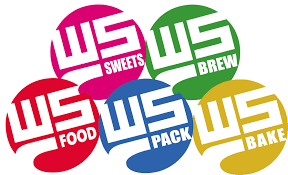
Weihenstephan Standards is not just a technical specification – it is a framework developed and maintained at the Technical University of Munich (TUM), Chair of Brewing and Beverage Technology. TUM has defined five industry-specific domains:
- WS Pack – The dominant standard for packaging lines. Defines everything from fillers to labelling machines and palletisers.
- WS Brew – The original model for brewery processes (brewhouse, filtration and storage).
- WS Bake – Tailored for the bakery industry, focusing on ovens, dough mixers and cooling towers.
- WS Food – Covers general food production and process equipment not covered by pack or brew.
- WS Sweets – Specific models for machines in confectionery manufacturing.
By working with these predefined domains, focus shifts from “how do we get the data?” to “what does the data actually mean?”. This is the core of digital freedom of action: having a uniform structure regardless of domain that makes the facility independent of individual machine suppliers’ software solutions.
Proven Effect: Coca-Cola Hellenic
Coca-Cola Hellenic, one of the world’s largest bottlers, faced the challenge that their factories were a “technical jungle” with machines from hundreds of different suppliers. To introduce a central system for measuring efficiency (OEE), they required that all machine suppliers support Weihenstephan Standards.
By mandating WS as the standard, Coca-Cola could use one and the same “interpreter” for all machines, regardless of whether they came from Krones, Sidel or any other manufacturer. The result: a unified view across all their facilities and the ability to compare performance between different countries in a way that was previously impossible.
An Open Standard Without Licence Fees
Unlike many proprietary protocols, Weihenstephan Standards is an open standard. There are no expensive licence fees for using the information model. By basing your architecture on open standards, you ensure that the investment goes to actual value creation – not to annual software fees to a specific supplier.
Practical Pointers
- Specify early: Include requirements for WS compatibility already in the procurement phase for new machines
- Take stock of current status: Map which machines already support the standard but where data is not being collected
- Think lifecycle: See WS as insurance against future vendor lock-in
How HubMind Helps You Take Control

HubMind’s methodology is about creating digital freedom of action. By implementing frameworks such as Weihenstephan Standards, we build bridges between the technology on the floor and the decisions made in the boardroom. We help you structure the technology so that it can be owned and developed over time.
Do you want control of your production data?
Buying advanced production technology without specifying information structure requirements is like buying a car without an instrument panel – you move forward, but you have no control. HubMind helps you navigate the boundary between machine suppliers’ specifications and your own need for operational data. By implementing standards such as Weihenstephan Standards 3.0, we ensure you own the information – not the supplier.
Continue reading
Why Standardisation Is Critical for Digitalisation, Integration and Automation
Standardisation turns shared identities, information rules and verifiable interfaces into long-term digital freedom of action.
Read article
Brick: The Semantic Interface
Turn a Brick graph into a governed semantic interface using SPARQL discovery, external data references, SHACL validation, versioning, provenance and acceptance tests.
Read article
Brick: From Tags to Meaning
Learn how Brick turns building-system tags into machine-readable entities, classes and relationships, and why it complements IEC 81346.
Read article
Leave a Reply