


TL;DR
The effect
A future-proof facility where lifecycle costs (LCC) are lowered and ROI on digitalisation is maximised. High interoperability creates a scalable digital infrastructure that makes you independent of individual suppliers.
The challenge
Technical facilities are drained of value when short-term choices create isolated silos. This technical debt leads to costly vendor lock-in, security gaps in legacy systems and data that is impossible to use for analytics.
The solution
Establishing genuine system ownership through strategic requirements management and information modelling. By paying down the debt, focus shifts from merely “keeping systems running” to actually developing the business.
Many facility owners and industrial operators believe they are investing in the future when they purchase new digital systems. But without a coherent strategy, you risk doing the opposite: building up technical debt that makes future innovation both more expensive and more difficult. Here we explain what technical debt means in a technical facility and how you start paying it down.
What Is Technical Debt?

The term “technical debt” describes what happens when you choose a quick, short-term solution over a well-structured approach. In industrial and building automation, this interest is paid in the form of expensive custom integrations, isolated data and systems that cannot communicate with each other – dramatically lowering your ROI on digitalisation.
Every time a shortcut is taken in a project, a new technical loan is taken out with high interest that future operations and asset management will be forced to pay.
It is important to distinguish deferred maintenance (not fixing what is broken) from technical debt. Technical debt arises when deliberate or unconscious architectural compromises are made – such as skipping a shared naming standard or accepting a closed integration – to achieve a short-term project goal. The price paid is reduced digital freedom of action.
Three Ways Technical Debt Arises in Your Facility

1. Structural Debt (Lack of Standards)
When different contractors are allowed to name objects and assets according to their own arbitrary systems, a debt arises that directly affects data governance. Without shared information modelling such as IEC/ISO 81346, your data becomes “dirty” and unusable for overall analytics. The interest: when you later want to introduce a digital twin or overall analytics tool, you must spend 80% of the budget on manually cleaning and remapping old data.
2. Architectural Debt (Silos and Point Integrations)
Solving specific problems with isolated apps instead of a well-thought-out API strategy creates a “spaghetti architecture”. Every new special solution reduces your interoperability – the ability of different systems to actually exchange information seamlessly. The interest: your IT environment becomes a spaghetti architecture where an update in one system risks bringing down three others, and nobody has the overall picture of how data flows.
3. Operational Debt – Lifecycle Debt
Installing a modern BMS system without a plan for how its network is to be managed – for example by the IT department – creates an enormous security debt. Retaining outdated legacy systems without an IT convergence plan is like driving a car that is never serviced. It drives up your lifecycle cost (LCC).
Requirements Management: The Bridge Between Governance and Reality

Many organisations have a strategic document for data governance that defines who should own what. But technical debt arises in the gap between these guidelines and the actual delivery in the project. This is where structured requirements management becomes decisive. You must not only “want” order; you must specify requirements for technical governance:
- From ownership to requirements: If your strategy says you should have clear system ownership, requirements management must ensure the system is delivered with open APIs that enable this ownership in practice.
- Quality assurance: Requirements management ensures the supplier delivers the metadata and information structures required to pay down the debt – not just a functioning physical component.
Warning Signs That Your Facility Is Living on Borrowed Time
- “We can’t get the data out”: You have masses of sensors, but nobody can answer how they connect in real time
- Innovation standstill: You want to introduce AI-based energy optimisation, but consultants say “the prerequisites are missing”
- Consultant dependency: Only one specific person at one specific supplier understands how the system is structured
- High LCC: Maintenance costs for “keeping the lights on” are consuming the entire budget for new development
- Expensive interoperability: A simple integration that should take a week takes three months due to closed protocols
How to Start Paying It Down

- Set technical standards: Decide which technical standards will apply in all future procurements. By requiring structure according to ISO/IEC 81346, you pay down structural debt from day one.
- Build IT-ready networks: Ensure your building automation rests on a secure IT foundation. This removes security debt and enables safe integration.
- Specify interoperability: Stop buying closed systems. Require open APIs and standardised information modelling in every new procurement to break vendor lock-in.
- Establish data governance: Decide who owns the definition of your data. By following ISO/IEC 81346 you create a sustainable structure that survives individual system replacements.
Technical debt is not an IT problem – it is a business risk. By starting to clean the digital foundations today and paying down your legacy systems, you ensure your facility is relevant and optimisable tomorrow.
Can you afford to let technical debt grow in your facilities?
Technical debt arises when information is allowed to become stuck in disciplinary silos. Every time a shortcut is taken in a project, a new technical loan is taken out with high interest that future operations and asset management will be forced to pay.
In the role of technical owner’s representative and Owner’s Representative, HubMind supports you in establishing genuine system ownership, securing the right requirements and creating sustainable data governance for your technical facilities.
Continue reading

The Complete Object: Who Owns Which Truth?
A practical owner-side guide to technical information authority: who contributes, governs and assures each part of a complete technical object.
Read article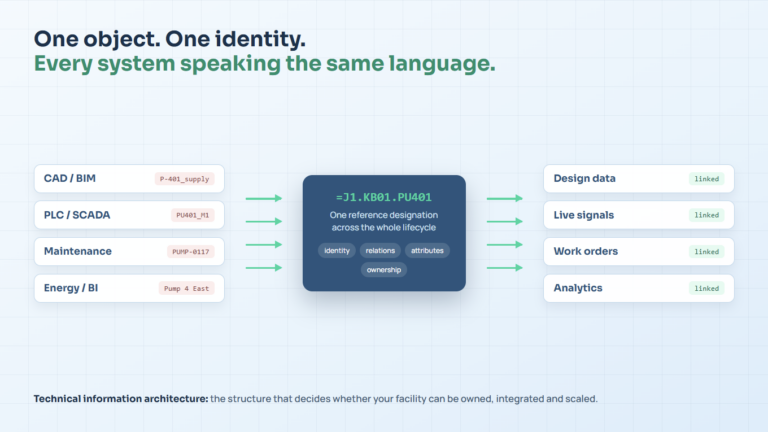
Why Technical Information Architecture Matters in Complex Technical Environments
Technical information architecture gives objects stable identity and traceability across requirements, systems, signals, documents, maintenance and analytics.
Read article
Requirements Management in Technical Projects
Professional requirements management connects every need to an identifiable requirement, verification method, evidence and accountable owner.
Read article
Leave a Reply